EXECUTIVE SUMMARY
Premium projects rarely fail because design expertise or manufacturing capability is missing. They fail in the space between them.
Today, complex physical environments are delivered through increasingly fragmented networks of designers, manufacturers, specialist vendors and installers. Each may perform its own role exceptionally well, yet no single party is necessarily responsible for protecting the original concept and intended customer experience throughout the entire process.
This creates an **accountability gap**. Traditional project management may control budget, schedule and delivery, but that does not necessarily protect design intent. Without independent oversight connecting concept, technical feasibility and implementation, problems are often discovered only when correcting them has become expensive.
The most expensive part of a premium project may therefore be neither the design nor the build. It is the unmanaged gap between them.
KEY TAKEAWAYS
- 01Competence does not eliminate fragmentation.
- 02Project management is not the same as concept ownership.
- 03The accountability gap is an expensive risk.
TRANSCRIPT (FULL)
**Gergő Nidermayer**
The most expensive part, it's not the design, it's not the build, it's the gap between them, and no one is managing it
**Hans Peterson**
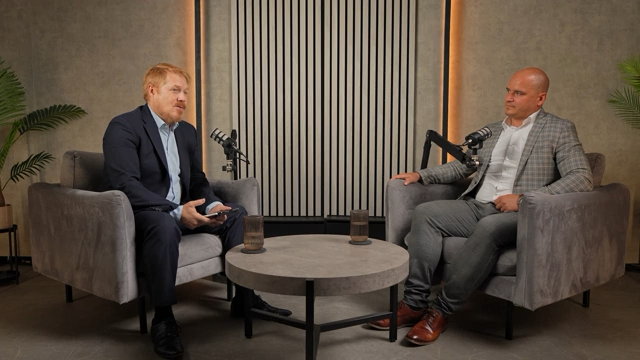
Welcome back to the decision space. I'm Hans Peterson, your host, and uh last time we were talking about the gap between the brilliant idea and the space that actually gets built. And this time we're going to go into that crack, that I that that gap, and talk about why it happens, who falls into it, and why it's really the most expensive risk in a premium project. So welcome back, Gedgar.
**Gergő Nidermayer**
Thanks for having me.
**Hans Peterson**
So let's start with the obvious question. Design, especially now, is better than ever. Yes, of course. Okay, and construction methods are better than ever?
**Gergő Nidermayer**
Yes, they are more advanced than before.
**Hans Peterson**
Okay, so why does this gap exist?
**Gergő Nidermayer**
Because designers and manufacturers and on this on the on the end, the installers, they don't talk to each other. And we don't have any responsibilities or responsible pers responsible persons uh who can manage this.
**Hans Peterson**
It seems like that's such an obvious element to have in place, a a project manager that owns everything from beginning to end. Why is it missing?
**Gergő Nidermayer**
Because they are managing the project, not the concept what they need to build. So that's a big risk, I think, for uh for brands and uh and for owners who try to give or make the story in real.
**Hans Peterson**
It seems obvious there should be somebody who takes it from here to the end, a a single owner. W why isn't that the case?
**Gergő Nidermayer**
The process has changed. Thirty years ago we had one company who is making the design, doing the whole process and deliver the final store. Now We have one company who is making the design who is doing really well. After we have one other company who is doing the manufacturing. Other vendors who are doing specialized things, for example, digitalization, and at the end, no one is there who is looking or who is knowing the whole process, what should be done.
**Hans Peterson**
So it's not like somebody's being incompetent. It's just that there are it 's just separate towers where everything is being managed independently.
**Gergő Nidermayer**
No, of course everybody is competent. Everybody knows uh very well what they need to do. But designers, they are keeping the hand on the design and they are Focusing to have the right design.
Manufacturers, they are keeping the hand on the budget, maybe on the schedule, on the timeline. Uh at the end, the other vendors they are keeping on the hand uh what they are doing and they are very good in it but the right thing is to have this all in one supervision. Uh the main thing is what what is lost, it's the it's the real concept.
at the end and the real uh customer experience what we should give for the customer from the owners from the brand owners side So it's really hard to have this to have this right at the end if everybody in the process had not the same interest. They have their own interests. Yeah, the main thing is actually just to understand for you, the main thing is that that they have experience maybe on the local market.
Maybe, but that's also not sure. But if you are talking about the big brand, they have the manufacturing site in Switzerland, if you're speaking about the watchmaker, but they have shops from uh from the states till Japan. Right.
And they don't have all the expertise everywhere. in the world. They have maybe the expertise in Switzerland, but that's all.
And they don't know how to make a good experience for the customers in Japan. Or in in a specific.
**Hans Peterson**
You do that. You go international.
**Gergő Nidermayer**
Yes real everywhere. We connect the dots. Okay. the designer , the real manufacturer who is making the concept real. But at the end, we need to hand over the same experience everywhere.
**Hans Peterson**
So uh make it concrete for me. What is getting lost in that gap? What's going wrong? How is it going wrong? Why?
**Gergő Nidermayer**
Imagine if you are trying to implement something which is not implementable, uh you will lose time, of course. You will lose money because you need to do everything twice or more times uh you will lose or you will have a very bad brand illusion so you have a very good plan you have a very good design but if you cannot hand it over to the right place uh on the right place with the right manufacturer to the client then it will be uh it will be a big loss and the third thing is that uh which is um which is more important than that uh you need to use as a client uh your own time and try to manage the whole process as a project manager without any real experience. And at the end, this is um or this can be uh a big time loss and a big money loss, even you have uh a good base for that.
**Hans Peterson**
And assuming that it actually does get realized. It's maybe getting realized poorly and that reflects poorly on the brand.
**Gergő Nidermayer**
Of course, and um you will see the outcome only at the end. So if you don't have the expertise or if you don't have the time to really manage the whole process. uh you will find out you did something wrong only really at the end of the process.
**Hans Peterson**
So in the end I think it's the client probably a marketing team. who are very specialized in that aspect are are being made responsible for a whole area of expertise which doesn't sit in their home base, that and and they're carrying all that risk.
**Gergő Nidermayer**
Uh first of all, I'm don't want to say they don't have the expertise, uh, but they have other jobs to do. They have the brand, they have the product, they need to care take care of these tasks So if uh we are opening a new shop for a client or if we are thinking about just project managing this whole process, it takes a lot of energy. So we we think uh that's not the job of the brand owner to take care of the whole process.
**Hans Peterson**
So how much does this cost them?
**Gergő Nidermayer**
We are speaking about millions, especially if we are speaking about the flagship store.
**Hans Peterson**
So I'm thinking back to my marketing days when I was a marketing manager. And I had the education to think about how do we market this product and everything that goes into that, including advertising and whatever. But then we had a designer, we had manufacturers, we had uh everybody at a separate place uh to do everything that needed to be done to implement a space It never really occurred to me that there was somebody other than myself to pull that all together. It would have been a dream to have something like that. Why, why don't why didn't we think of it?
**Gergő Nidermayer**
Actually, the key is what he said. So you had the designers, they do the design, they are designers. You had the manufacturers, they are doing a manufacturing job and they are taking care of the manufacturing.
But what we are doing in Andorians, it's definitely a new thing. It's a new layer, we can say. And most importantly, this has to be, and we are, an independent layer Independent because uh we need to be honest.
We need to be honest with the project, we need to be honest with the concept, and uh we need to find the gaps And most importantly, we need to take care of the whole project, the budget, the scheduling and everything. And that's the only way if we are independent.
**Hans Peterson**
So you're the independent authority who's there to make sure that everything gets done right. It's just so strange that it really didn't exist before.
**Gergő Nidermayer**
Yeah as as we try to explain it uh we are in a new era. So they are specialties. Design agencies, they are specialized to the design, uh manufacturing capacities and capabilities and Companies, they are very specialized to manufacturing the products.
But they don't have uh the right connection and they are focusing on their own. uh work to do. So that's why we need to have this independent layer, which is really a new thing.
**Hans Peterson**
Alright, thank you. That's it for this episode. And if last episode we talked about uh the space not being neutral anymore, and this time we were talking about the accountability gap, uh somebody who will hold the whole thing together instead of all the individual pieces.
Next time we're gonna go into the space and the person who's making the decision in that space. And for that, I'm going to bring in a third voice. So stay tuned for next episode of the decision space.