EXECUTIVE SUMMARY
Product expertise and design judgement do not automatically reveal what the intended customer needs from a retail setting. ENDORIENCE encounters a recurring problem: spaces that express their creators’ preferences while making the desired audience feel out of place. The response starts with a clearer distinction between brand intent and personal taste, informed by customer motivations and tested through real encounters with the space. The commercial question is whose confidence the environment builds.
KEY TAKEAWAYS
- 01Agreement between an owner and a designer does not establish a fit with the intended customer.
- 02Customer comfort concerns confidence, autonomy and the freedom to explore, as well as physical ease.
- 03Personality-informed enquiry helps explain what to investigate; customer encounters show how the setting works.
- 04Preserve the brand’s intent while testing the spatial and service choices used to express it.
A room can please the wrong people
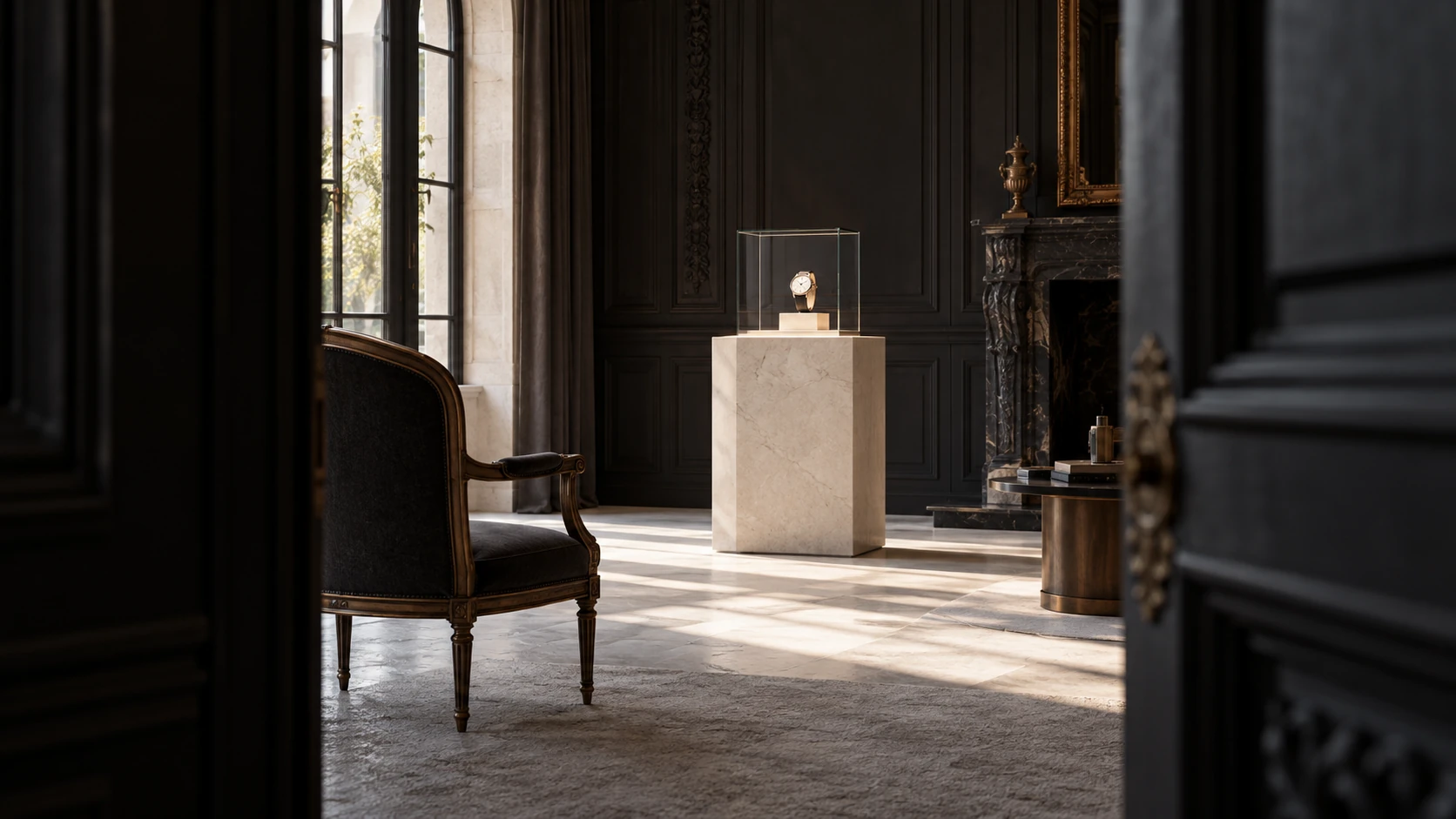
Imagine a youthful designer watch presented in a private room furnished in a baroque style. Could it sell? Of course. An unusual contrast might be exactly what gives the brand its character. But the more useful question is what happens when the intended customer enters. Do they want to explore, or do they feel they have walked into someone else’s world?
The owner may love the room. So may the designer. Both can explain its quality in convincing detail. Neither response tells us whether the customer feels welcome enough to pick up a watch, ask an elementary question or admit that the first recommendation is not right.
That is a different task from designing a room its creators would enjoy occupying. It requires judgement about the people the business wants to serve, including those who have not yet become confident customers. A setting that reassures an established collector may intimidate someone making a first considered purchase.
In Beautiful Is Not a Business Case, ENDORIENCE examined the evidence needed to support a concept as an investment. Here the concern is narrower: whose preferences have shaped the customer experience, and whose voice is missing from that process?
When the room fits its creators
FROM ENDORIENCE PRACTICE
Across ENDORIENCE consultations, we have encountered a recurring pattern. A brand owner knows the product exceptionally well and appoints an accomplished designer. Their collaboration produces a space they both find attractive and comfortable. They could happily spend their own days there. The intended audience is less convinced.
The mismatch often becomes visible only after opening, when the business asks why the environment has not attracted the customers it expected. Sales below plan and concerns about the brand’s reception bring the question into focus. By then, the choices under discussion are built, furnished and emotionally difficult to revisit.
This does not make either professional careless. The owner contributes years of product knowledge. The designer understands material, proportion and spatial composition. What is missing is a reliable account of how the intended customer experiences the result. Mutual confidence allows that gap to pass unnoticed.
In these conversations, we ask what the room assumes about its visitors. Must they already understand the product? Are they comfortable asking for attention? Does sitting down feel like an invitation to explore, or an obligation to purchase? A space can send a message that differs sharply from the one its creators intended.
Personality-informed analysis helps us examine the motivations behind those reactions. It opens a more useful conversation than a simple question about whether customers like the decor. We want to understand what gives them confidence, what makes them hesitate and what would make a return visit feel worthwhile.
The owner’s enthusiasm remains valuable. It supplies conviction and protects the brand from becoming generic. The challenge is to translate that conviction into a setting customers can relate to, without requiring them to share the owner’s taste.
Comfort is more than a comfortable chair
In premium retail, comfort includes the freedom to take time and to remain uncertain. A customer may need to compare two pieces without being watched closely. Another may want an adviser to make the first approach. Someone entering an unfamiliar category may need reassurance that a basic question will be taken seriously.
The same design choice can support one encounter and obstruct another. A private room can offer discretion to a returning client while making a new visitor feel that they have crossed a threshold too soon. Open display can invite exploration, yet leave a customer unsure whether touching is permitted. The service around the setting matters as much as its appearance.
Mary Jo Bitner’s servicescape framework places physical surroundings within the customer and employee experience. [1] It gives this discussion a useful foundation: the environment participates in the service encounter. It is not simply a background against which the product is sold.
ENDORIENCE uses this human perspective to examine the relationship between the customer, the setting and the decision. RISE supports the enquiry through a personality-informed approach. [2] It helps us explore why different people may seek different forms of reassurance or autonomy. Those questions then guide conversations and observation in the actual retail context.
A personality profile should not become a decorating instruction. There is no useful shortcut from a label to a colour scheme or furniture style. The value lies in understanding the decision the customer is trying to make, and the conditions that help that person make it with confidence.
Nor should comfort mean removing every unfamiliar element. Discovery is part of the appeal of many premium brands. The distinction is between an experience that invites the customer into something new and one that leaves them unsure whether they belong there.
Bring the customer into the design conversation
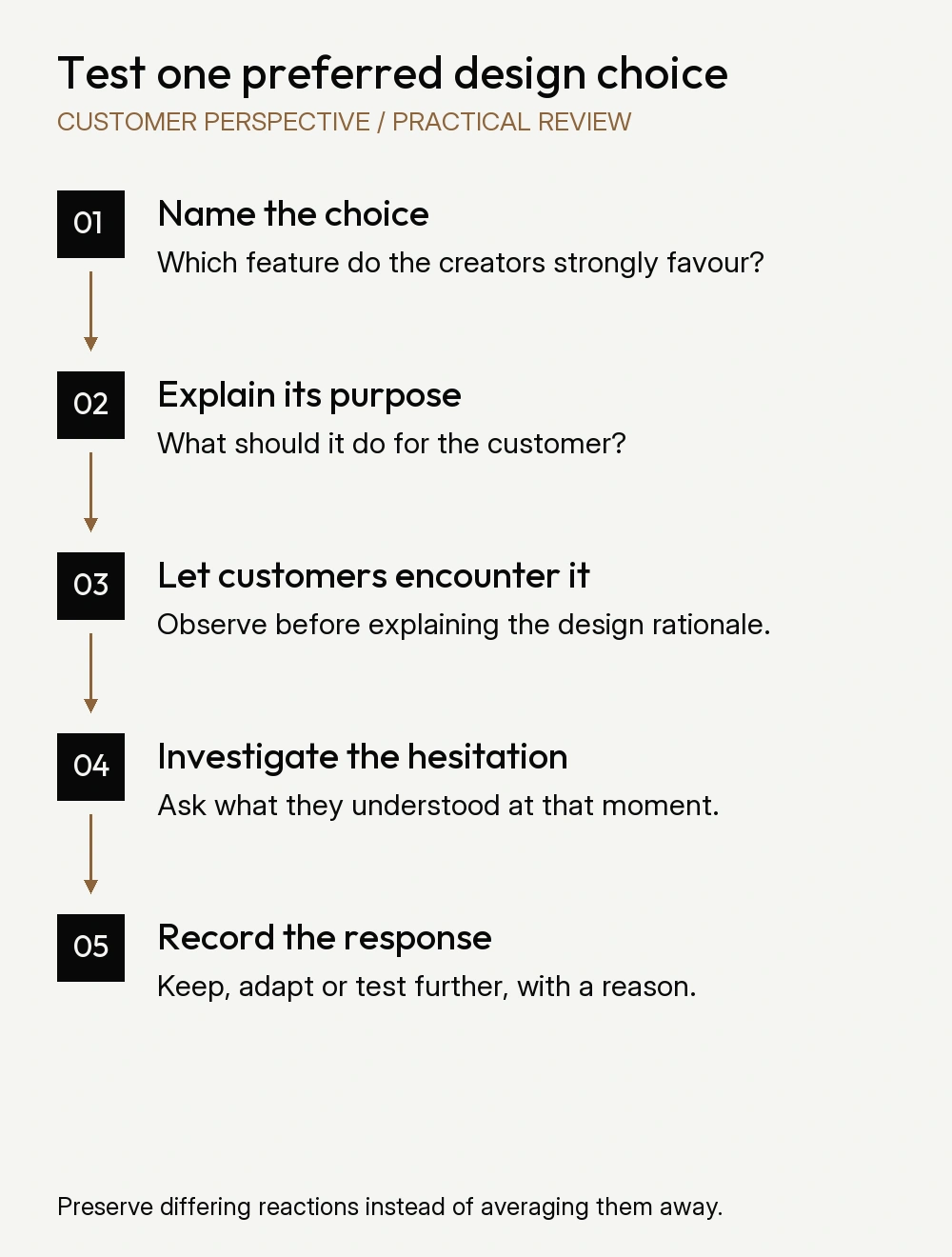
Start with one consequential choice that the owner and designer strongly favour. Ask each to explain what it should do for the customer. If the answers describe only how the choice looks or how much they personally like it, the brief needs more work.
Then meet intended customers where that choice becomes real. A full interior is not always necessary. A consultation setting, display arrangement or service rehearsal can reveal whether people know how to begin, feel able to ask for help and understand what happens next. Let them encounter it before explaining the design rationale.
Watch for the moment an intended benefit becomes a difficulty. A visitor who is offered privacy may want to remain in an open area. Someone invited to browse may wait for permission. Ask what they understood at that point. The explanation often matters more than a general satisfaction score.
Recruit beyond loyal clients and the owner’s immediate circle. Include people the brand wants to attract, particularly those unfamiliar with its conventions. Record disagreement instead of smoothing it into an average preference. It can reveal that one service route will not suit everyone.
Protect the brand, question the expression
Customer evidence does not turn design into a vote. A brand needs an authored point of view. The purpose of enquiry is to understand where the chosen expression helps people connect with that point of view, and where it creates an unintended barrier.
If discretion matters, test how to provide it. A closed room is one expression; an invitation to move into a quieter setting later in the conversation is another. The brand can protect the intended quality while changing when and how customers encounter it. That distinction gives the designer room to solve the right problem.
Commercial evidence belongs in the discussion, but it needs context. A customer leaving without buying may be comparing options, considering price or waiting for the right product. Follow the journey closely enough to understand where the space contributes to hesitation. A change in sales alone cannot explain which part of the experience worked.
Return visits deserve the same attention. Ask what customers came back for and how the environment supported that relationship. The answer may concern a trusted adviser, the pleasure of discovery or the freedom to look without pressure. These insights can influence the brief more usefully than an assumption that a successful interior must be visually impressive.
The executive implication
For the owner, the difficult moment is accepting that personal certainty is not customer evidence. For the designer, it is allowing the experience of an unfamiliar visitor to challenge an elegant solution. Neither requires abandoning expertise. Both require directing it towards the person whose choice sustains the business.
Before approving the next significant spatial decision, ask who is represented in the room where that decision is made. If the intended customer exists only as an imagined person who agrees with the creators, the project has a blind spot worth addressing now.
Sources and research notes
- Mary Jo Bitner (1992). Servicescapes: The Impact of Physical Surroundings on Customers and Employees. Journal of Marketing 56(2), 57–71. Conceptual framework connecting physical surroundings with customer and employee responses.
- RISE Analysis. Business Solutions: personality-informed individual and team analysis. Personality-informed individual and team analysis.